Maps & Traces
Exhibition Summary
Maps & Traces is a major body of work by Australian contemporary artist Bronwyn Davies, exploring the intersections of art, nature, and storytelling through drawing, installation, and works on vintage maps. Developed through residencies across diverse Australian landscapes, from the Tarkine in Tasmania to the Daintree in Far North Queensland, the series reflects on landscape as a living record of memory, ecology, and cultural history.
The works are informed by Davies’ long-term project If Trees Could Talk (2021–present), which considers trees as witnesses to human and environmental change. Through intricate line work, text, stitching, and layered materials, the exhibition traces histories of conservation, colonisation, and ecological connection across place and time.
Exhibition Details
Solo exhibition
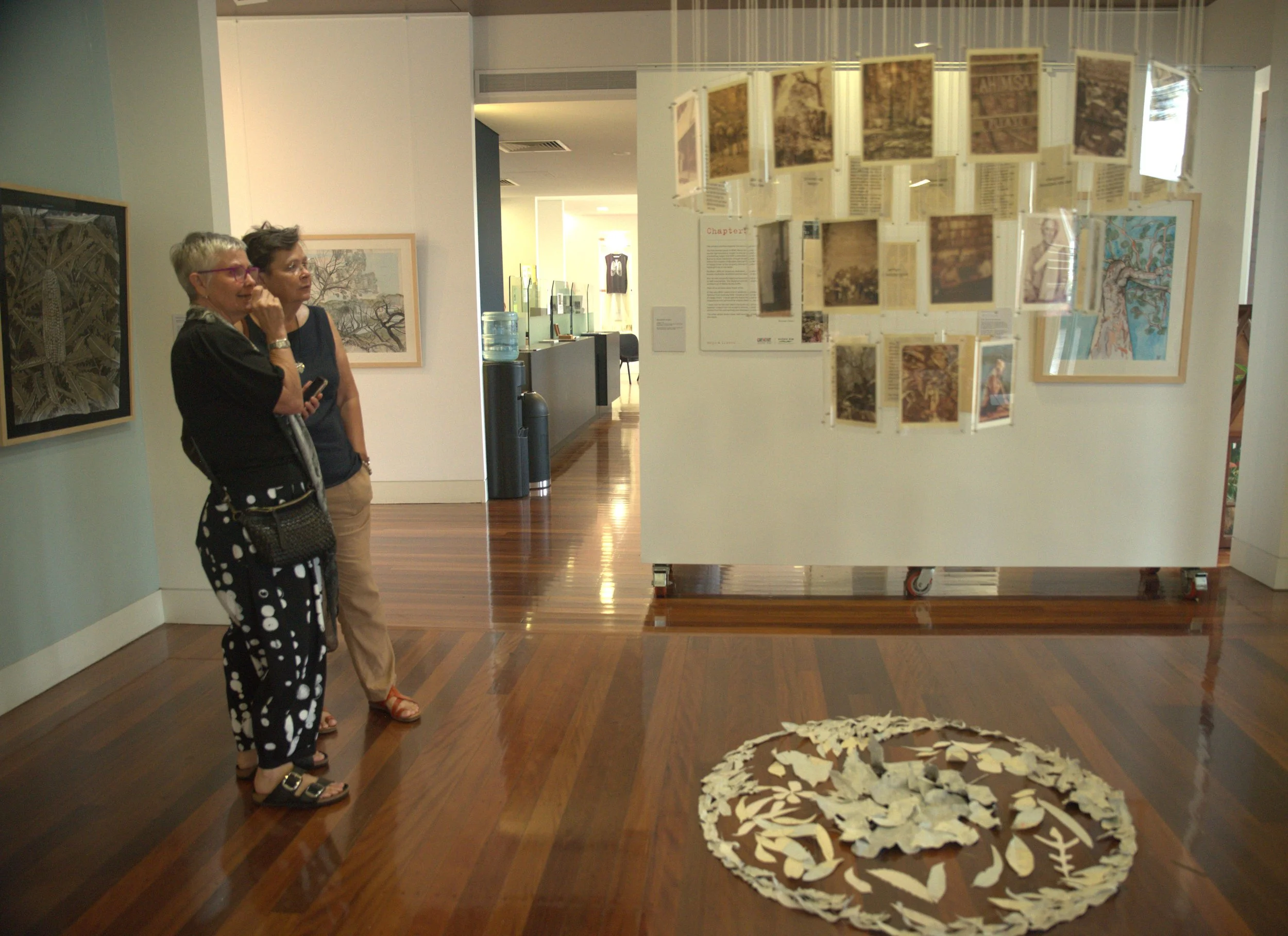
38 artworks and 2 installations ( See Links to Chapters and Traces)
Painting, drawing, mixed media, vintage maps, installation and collected objects
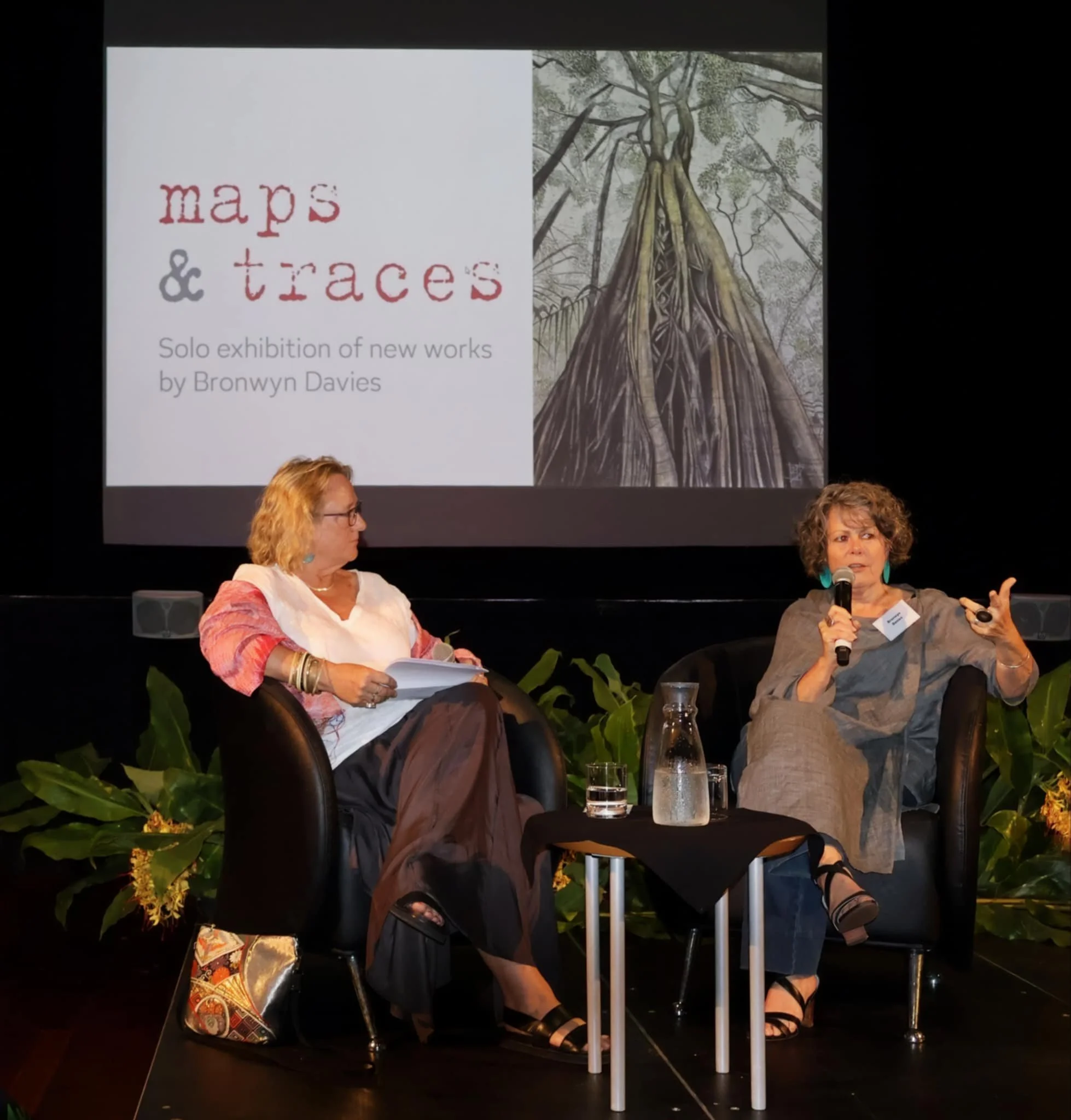
Public program included workshops, artist talks, film screenings and forums
The Centre- Regional Gallery Beaudesert February - April 2025
Catalogue available on request
Selected Works
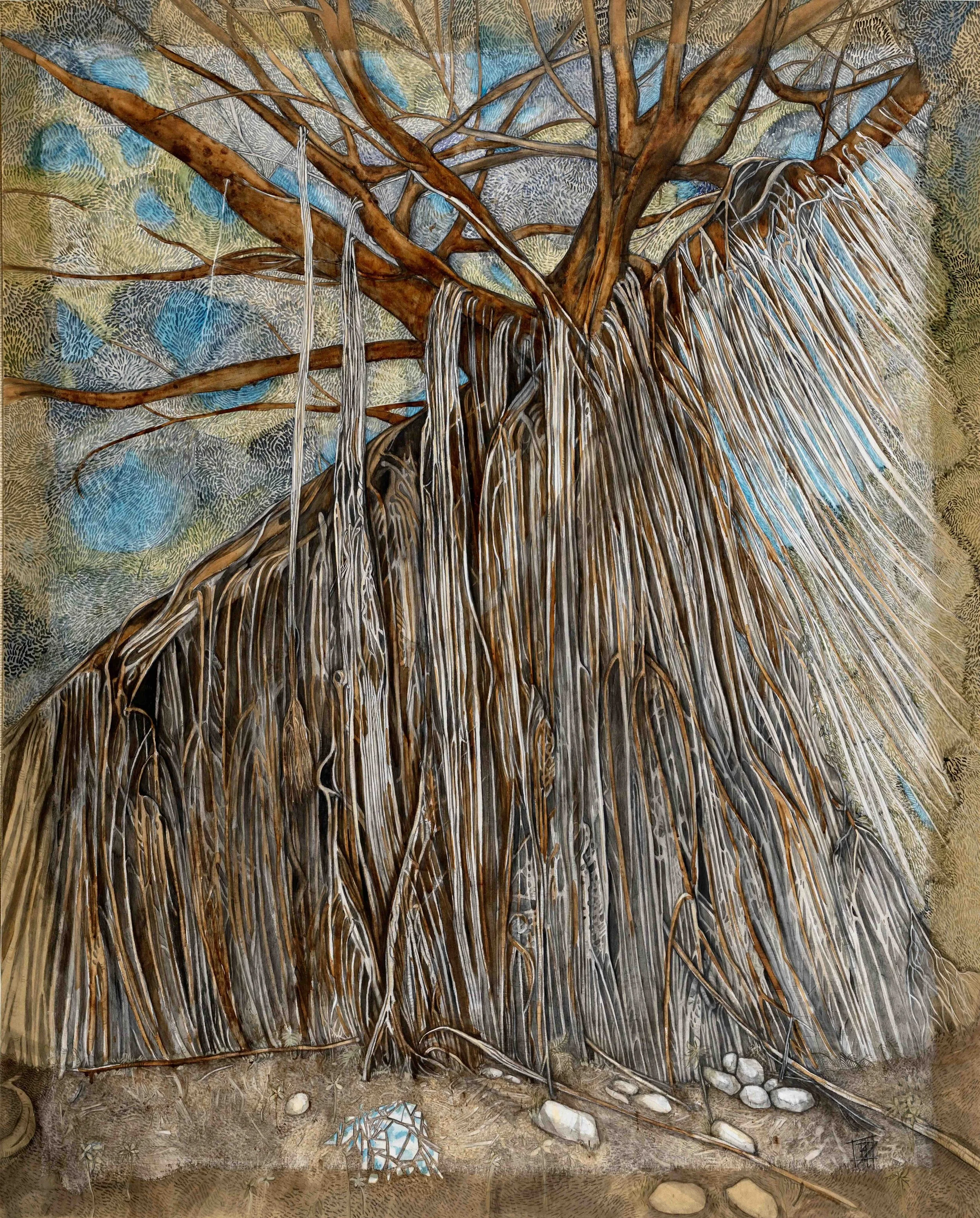
Song to the Listening Sky 2024 (Curtain Fig, Ficus virens) Inspired by the Curtain Fig Tree of the Atherton Tablelands, this work considers the rainforest as both ecological system and mapped territory. Located within the remnants of the Mabi Forest, the Curtain Fig (Ficus virens) exists within a landscape shaped by classification, environmental change, and colonial observation. Over centuries, its aerial root structure has been recorded, measured, and interpreted as both natural phenomenon and scientific specimen. This work reflects on how forests are documented, named, and understood through systems of mapping, knowledge, and environmental record-keeping within the Australian landscape.

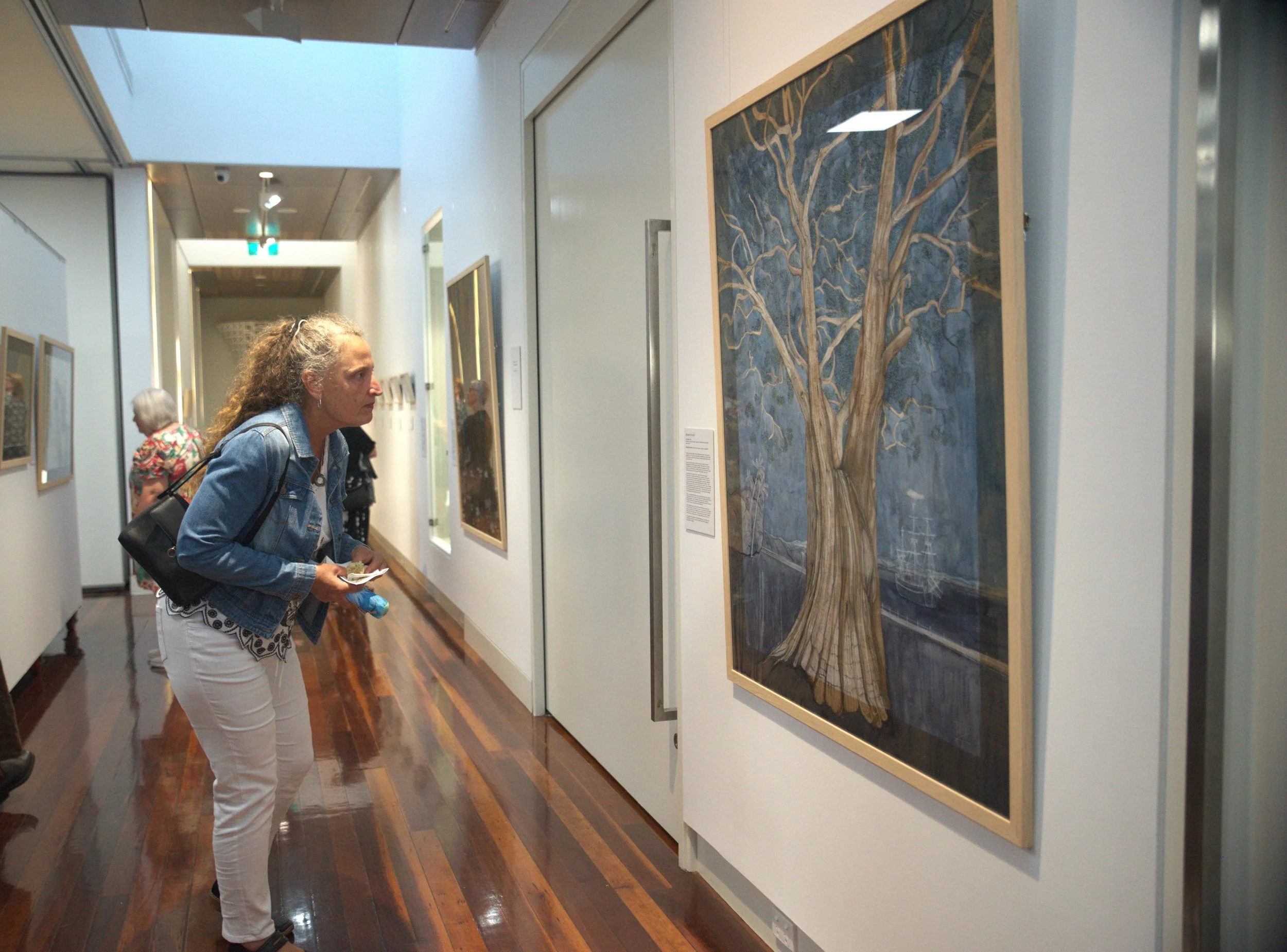
Under Carbeen (Moreton Bay Ash, Corymbia tessellaris) 2023 Under Carbeen reflects on the Moreton Bay Ash (Corymbia tessellaris) within the coastal landscape of Eurimbula National Park. Known as Goranja to the Kabi Kabi people, the tree exists within systems of kinship, knowledge, and place that predate colonial mapping. The work considers how these coastal environments were recorded, renamed, and surveyed through European exploration, often displacing Indigenous understandings of Country. Overlaid on cartographic material, the tree becomes a site where ecological knowledge and colonial systems of classification intersect and diverge.
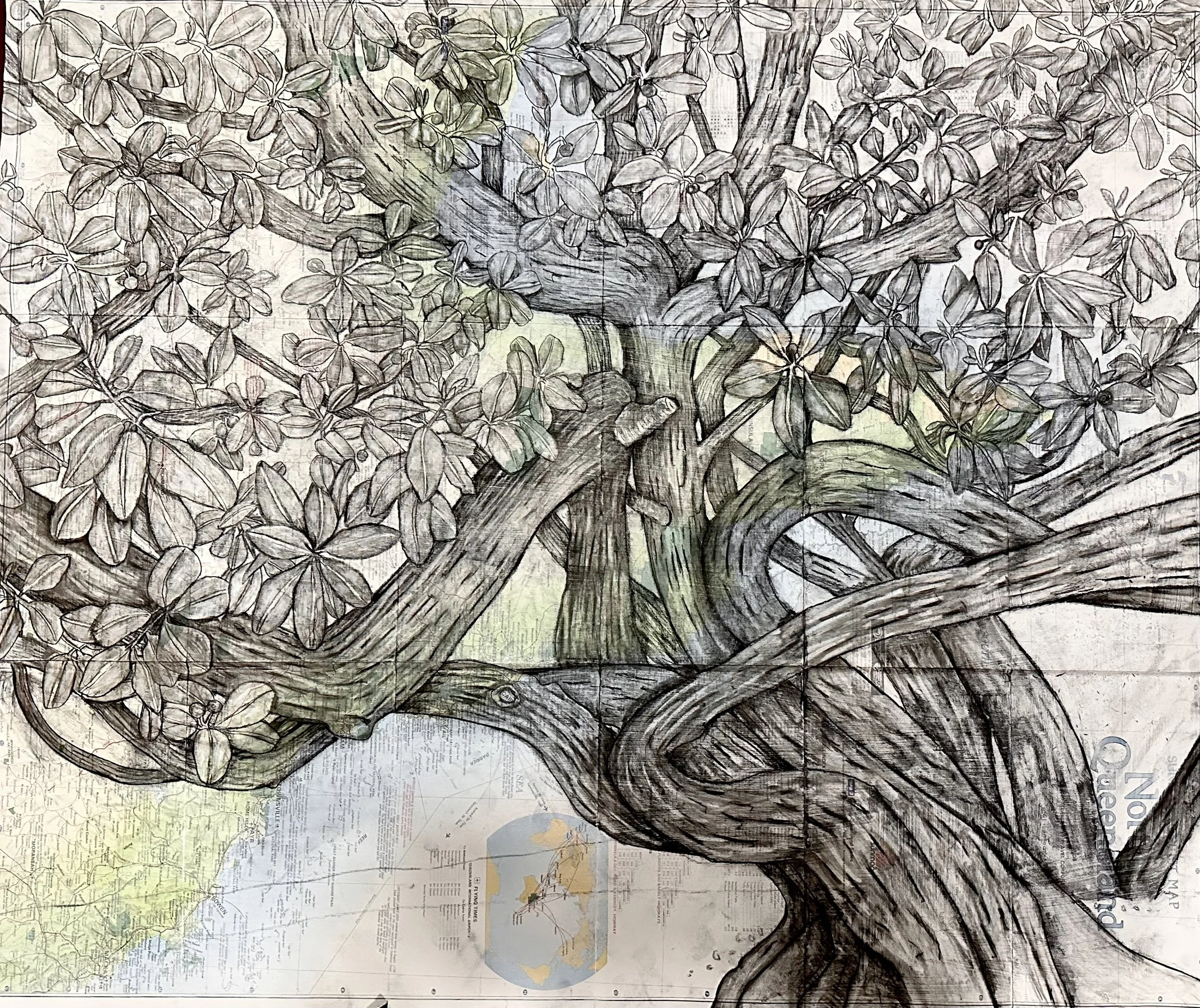
Calophyllum Dreams 2023 Calophyllum Dreams reflects on Calophyllum inophyllum within the coastal environments of Cooya Beach, Queensland. Long valued for its medicinal oils, timber, and ecological resilience, this species has been part of complex systems of use and knowledge across coastal regions. The work considers how coastal trees are situated within histories of resource mapping, environmental observation, and Indigenous knowledge systems. Enduring cyclones, salt winds, and shifting shorelines, the mastwood becomes part of a broader ecological and cultural record of coastal Australia.
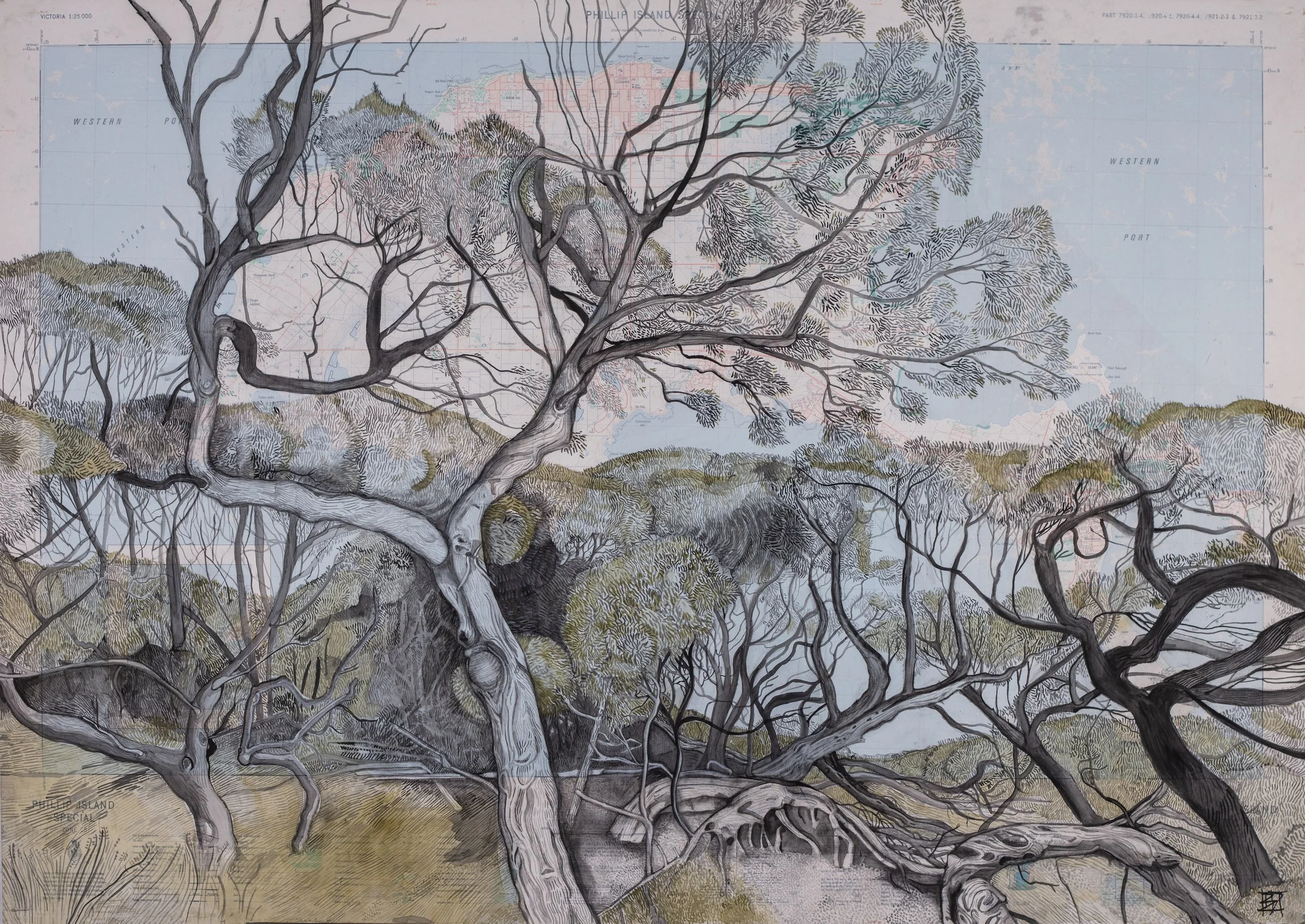
Into My Arms 2023 Into My Arms considers the Moonah (Melaleuca lanceolata) within the coastal ecologies of Phillip Island, Victoria. Once widespread, Moonah woodlands have become increasingly fragmented due to land clearing and environmental change, leaving remnant populations within protected areas. This work reflects on the mapping of endangered ecosystems and the shifting boundaries between natural habitat and human development. The sculptural form of the Moonah is read here as part of a broader environmental record—one shaped by pressure, adaptation, and ecological loss.
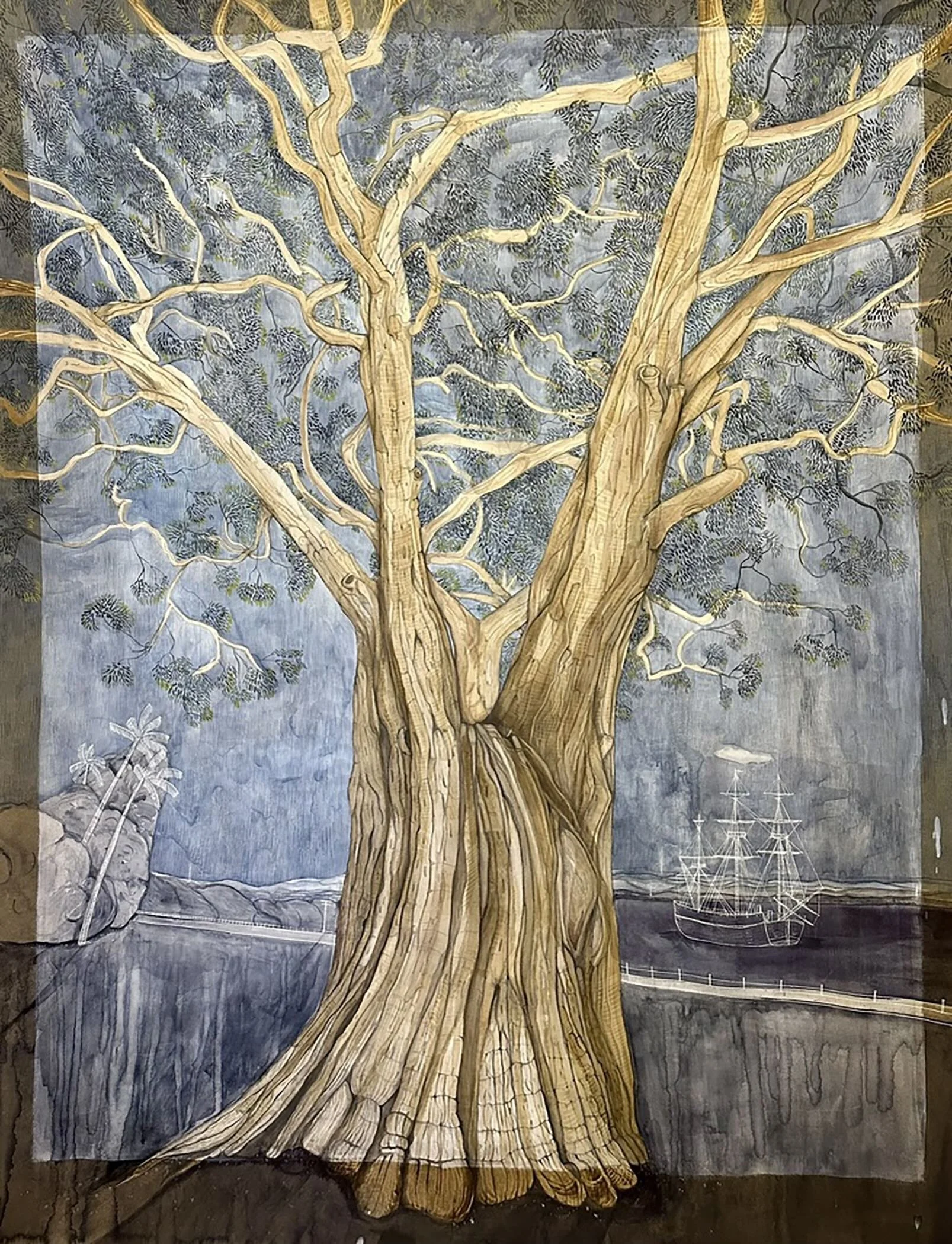
The Visitors 2024 Natural inks pigments, guache, watercolour, graphite paint on acid free paper 140 x 110 cm Paperbark (Melaleuca quinquenervia) is a wetland species deeply embedded in coastal and riverine ecologies of northern Queensland, including the Endeavour River region at Cooktown. This work reflects on the tree as both ecological system and cultural presence, shaped by water, fire, and seasonal change. Paperbark forests support complex habitats for birds, insects, and aquatic life, while also holding histories of place that predate colonial mapping. The drawing considers the tree as a living archive of wetland environments under ongoing ecological pressure and transformation.
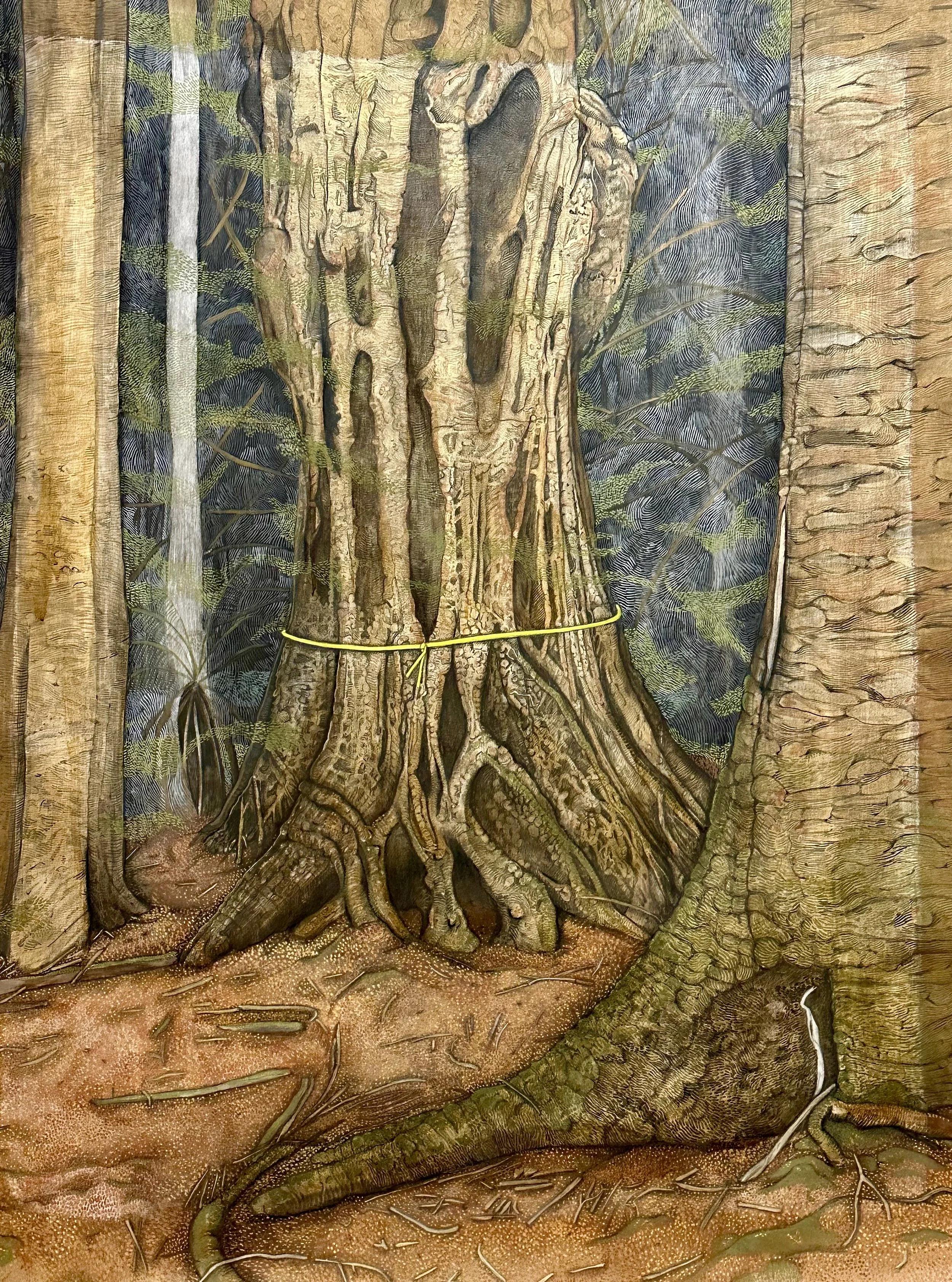
No Room For Machines 2024 Natural inks pigments, guache, watercolour, graphite paint on acid free paper 140 x 110 cm Myrtle Beech Tarkine Tasmania The Myrtle Beech (Nothofagus cunninghamii) of Tasmania’s Tarkine rainforest represents one of the oldest temperate forest systems in Australia. This work reflects on deep time, ecological continuity, and the fragile persistence of ancient rainforest ecologies. Within the Tarkine, Myrtle Beech forests exist as remnants of Gondwanan landscapes, shaped by fire history, climate stability, and ongoing environmental pressure. The drawing considers the forest as both living system and endangered archive, holding ecological memory across thousands of years.
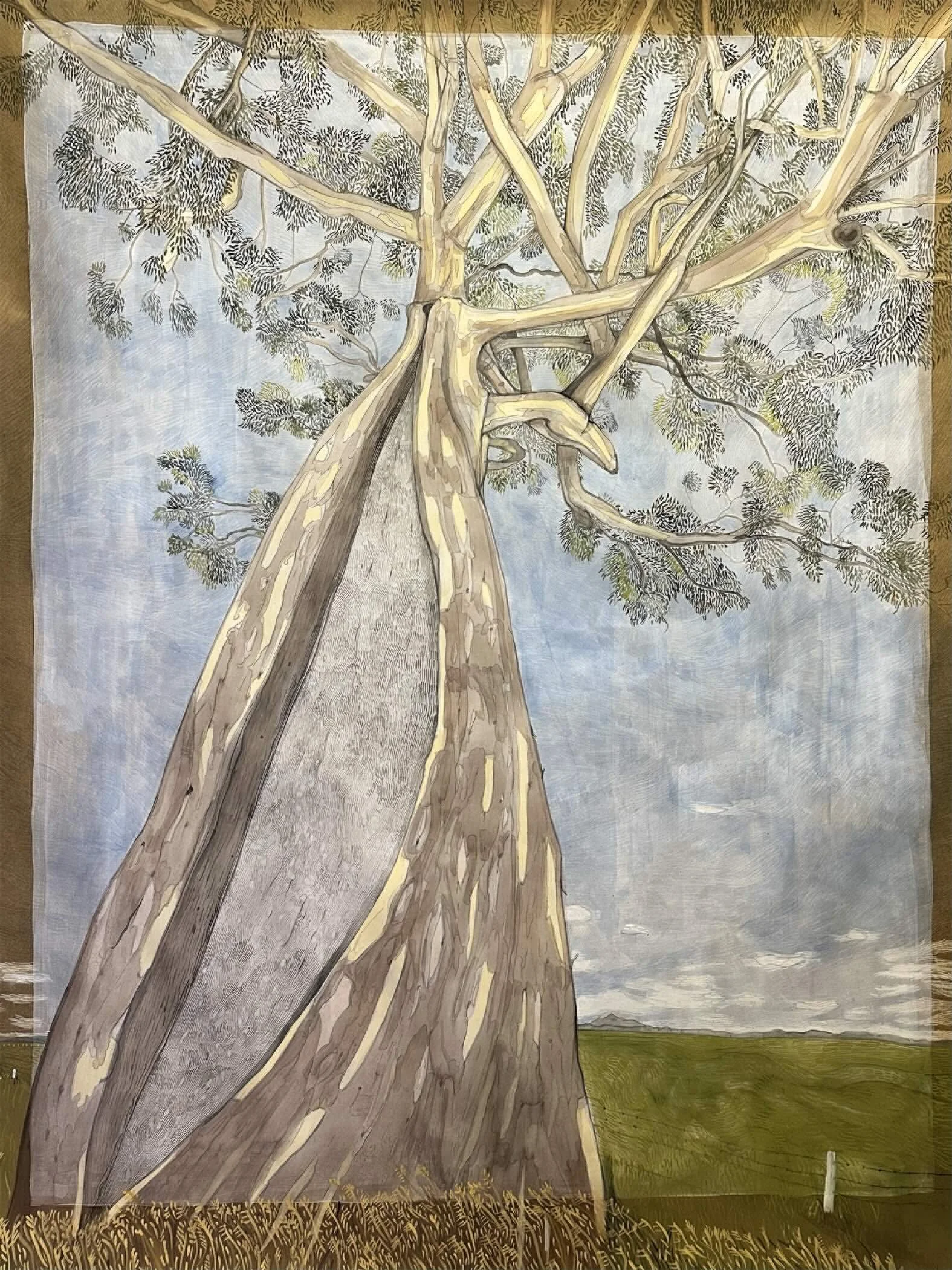
Where Once a River Flowed 2024 Natural inks pigments, guache, watercolour, graphite paint on acid free paper 140 x 110 cm This work considers the Canoe-Scar Tree of Bromelton as a cultural and ecological marker within the landscape of southeastern Queensland. Scar Trees carry the physical imprint of Indigenous land use practices, where bark was carefully removed for canoes, containers, and shelter, leaving lasting traces in living wood. The work reflects on the tree as a record of sustained relationship between people and place, and as a living witness to changing land use, colonisation, and environmental transformation over time.

In The Mist Charcoal, handmade paints over a vintage cadastral map of Lamington. This work incorporates vintage cartographic material layered with drawing to reflect on systems of mapping, exploration, and the historical recording of Australian landscapes. The use of archival maps considers how land has been represented, classified, and interpreted through colonial surveying systems. By reworking these materials through drawing, the work creates a space where mapped knowledge and lived ecological experience intersect, revealing the tensions between representation, memory, and place.