
When is enough, enough?
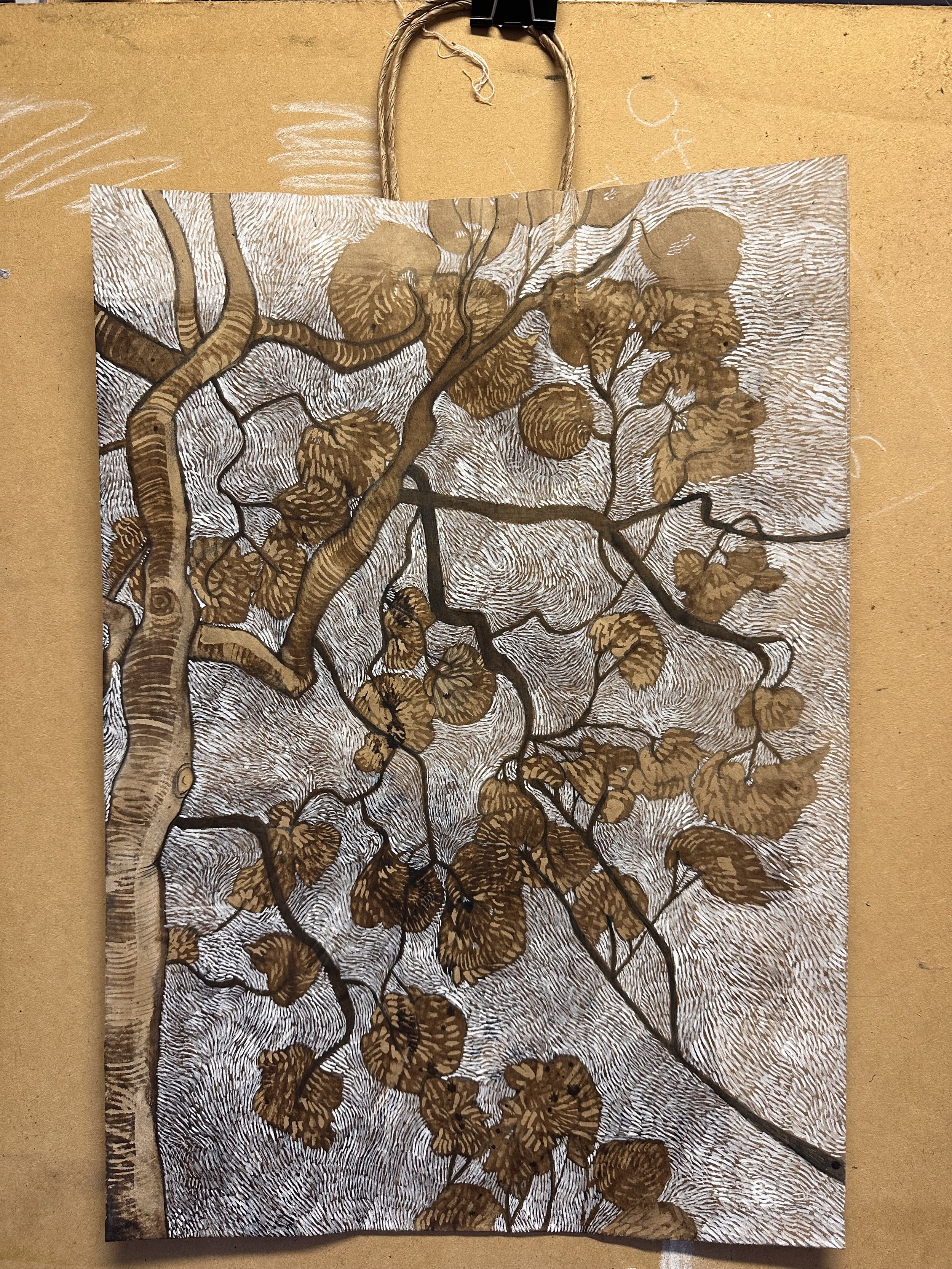
Takeaway, work in progress
I have ended relationships and tortured myself struggling to resolve things. I have drawn lines in the sand and viewed that line as an edge, a boundary, a place to take action. It is a lifelong tendency, this urge to take action to resolve things I cannot accept.
In my 20s I came across this quote by Shantideva (an 8th Century Indian Buddhist master)
“If something can be changed, there is no need to worry or be angry. If it cannot be changed, worrying and being angry will not help, so there is also no use in it.”
What that sparked in me was the idea that I would need to make or work towards the changes I wanted to see in the world , my relationships and my community or learn to accept them. Acceptance is hard to swallow in the face of climate vulnerability, political and social upheaval, inequality and lack of respect or belief in our shared humanity. Which battle to focus on?
Now in my 60s I am beginning to ask different questions.
October is a hard month for me. It recalls the death of my second husband in 2012 not long after returning from a trip to Tibet and India. In Dharamsala I had met with Tibetan survivors of Chinese prisons, artisans reviving Tibetan language and culture, refugees and orphaned children. I had met academics, monks, officials and had an audience with the Dalai Lama. In Lhasa I saw for myself evidence of a rich culture but also suppression and oppression. To say it touched me deeply is an understatement. That trip gave me an insight into courage and grace. The Buddhist teachings supported me through the difficult days when my husband was missing and later found to have died suddenly while swimming across Hinze dam.
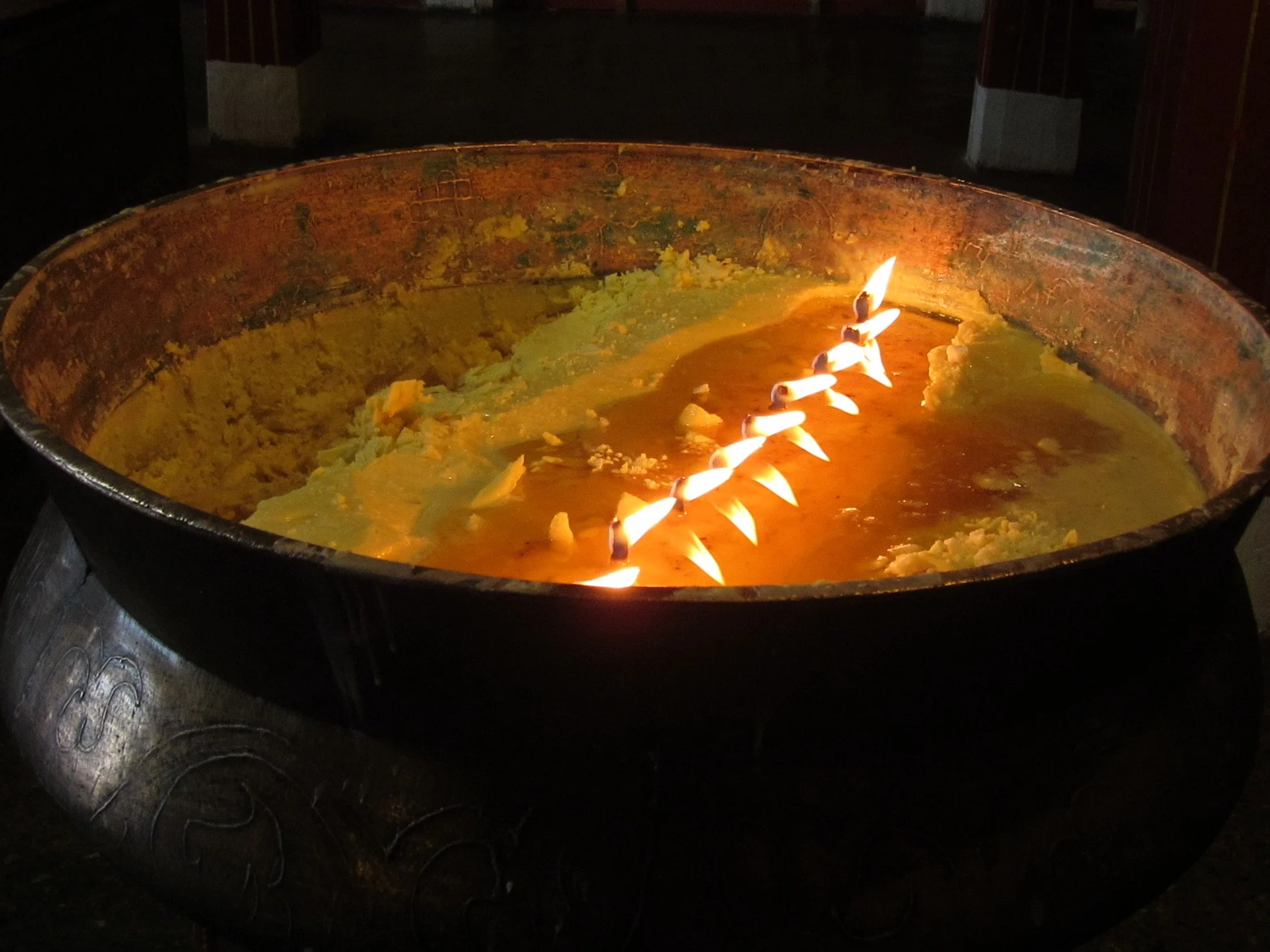
Tibetan butter Lamp Lhasa
Pujas were said for me, community supported me, stories were shared and tears shed.
As I walked through this time, I came to reflect on the inevitability of death and suffering, and that it is the stroke of a brush we all share. It was a loss that could not be reversed and a change that had to be confronted. How I dealt with that was the only thing I could control.
Shantideva's words echo.
Living on Tamborine Mountain and working across the region I have had the privilege of working with some wonderful people on powerful projects. Working with communities I have seen the changes that can be made through collective effort over a long time. It has taught me we can do much when we share stories, and work collaboratively on things we cannot accept.
I review that line in the sand differently. I am now working on my own arts practice , still wanting to move the needle, to make work that is relevant or impactful to these times and looking at meaning making. There are different kinds of enough. Some to embrace, others to resist.
I sit in the morning light streaming through my studio window. The cedar tree now laden with green leaves; birds sing; lemon and ginger tea cools in my cup.
I take a breath.
I have always liked the way random things seem to be more than coincidental, sometimes prophetic or guiding. Recently I was playing dictionary lucky dip (An exercise I developed where I choose a random word from a random page in a dictionary and then write automatically without thinking about that word.)
The word I found was “noble”. I wrote for five minutes then thought about birds, animals, place, people, things that are sometimes described as noble. Among the qualities I associated with nobility were moral courage, restraint, grace in the face of tragedy and ordinary kindness.
Next I opened a poem from the Poetry Pharmacy‘Ghazal’, by Mimi Khalvati—
‘However large earth's garden, mine's enough.
One rose and the shade of a vine's enough.’
The ideas of moral courage and sufficiency swim around my mind.
What does it mean to travel through life with a sense of nobility, to focus on things that matter, to be content with the shade of the vine?
As October unfurls, news comes of the alleged attack on independent MP Helen Haines outside her electorate office in Wangaratta. A woman widely respected in her community, who suffered critical injuries. Her family acts with grace and asks for privacy as horror, speculation and finger-pointing fill the media.
I tune into a discussion about the incident with Waleed Aly and Scott Stephens on ABC Radio National's The Minefield. It leaves me thinking about the questions we ask in the face of violence. Of course, we need to know who did what and why. But I wonder about the broader conditions in which anger, hostility and division take hold.
It feels like we are asking the wrong questions and looking in the direction of the fire rather than the water which will prevent the flames from erupting.
How might we as a society act with more grace and nobility?
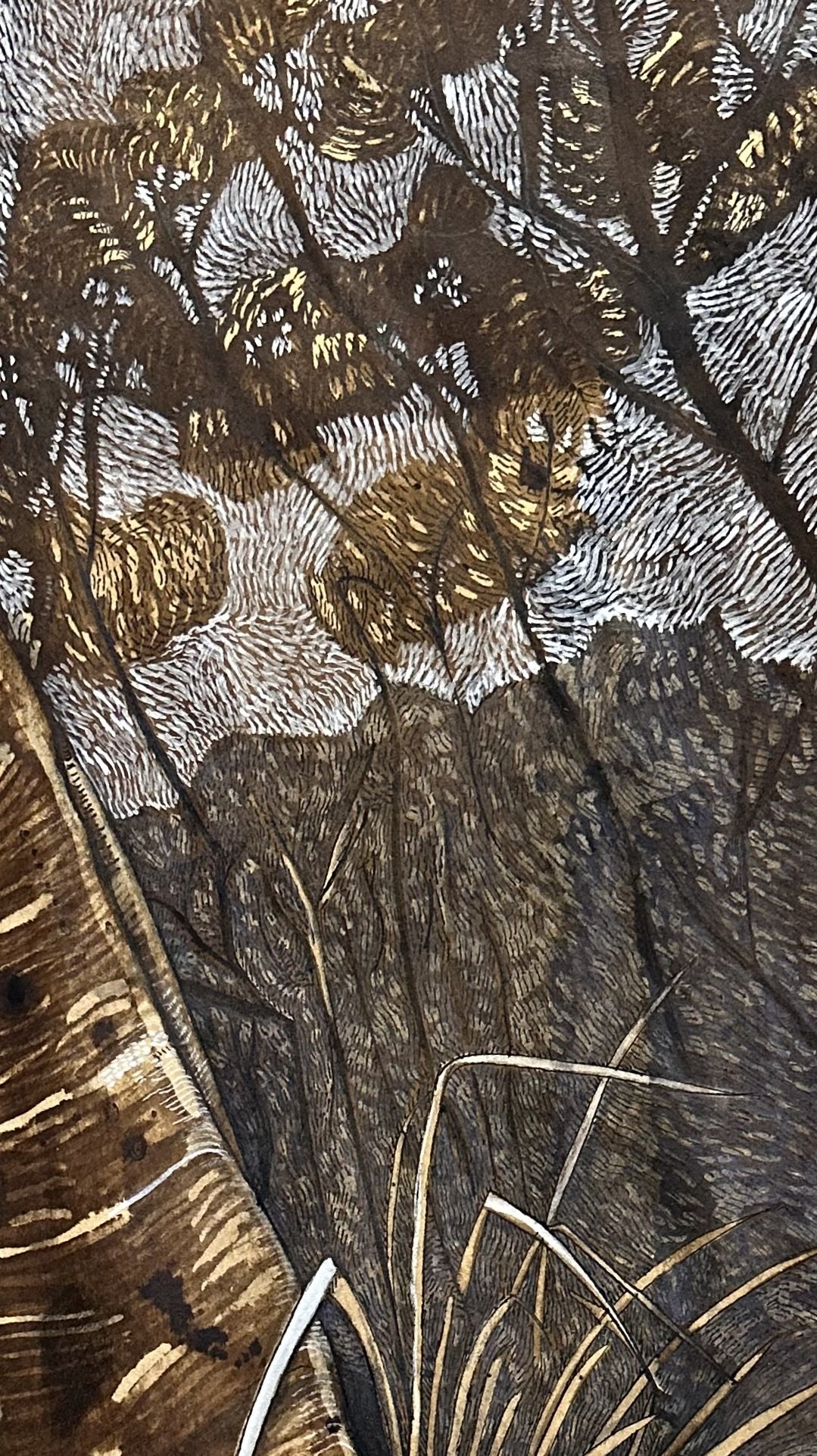
detail Takeaway
Back at my easel, a new work emerges: Takeaway. A landscape deliberately drawn across four brown paper carry bags, objects often discarded after a single use. The subject is a eucalypt, one of the trees harvested for paper and packaging.
I may not be able to repair a landscape, but my work can be a song for the trees.
There is enough here to be grateful for, and still much that should not be accepted.
Shantideva: Bodhicaryāvatāra, Chapter 6, verse 10.
Mimi Khalvati: ‘Ghazal’ (after Hafez), from The Meanest Flower (Carcanet, 2007).
ABC Radio National: The Minefield, 22 October 2026